🗓️ Last Updated: 27 Apr 2026
Ardan Kumar | AKTV | Trading Education | 10 minutes read
Read in Hindi: Market आपको फंसाए उससे पहले आप Market को फंसाओ
Table of Contents
Every trader has been there. You spot a clean setup, the level is clear, your confidence is high, and you take the trade. And then what happens? Stop loss hit. Price turns around and goes exactly where you thought it would go. Just without you in it.
That is not bad luck. That is manipulation. And today we are going to learn how to use that manipulation in our own favour.
What is Manipulation?
Manipulation simply means price deliberately breaking a key level, hitting retail traders’ stop losses, and then immediately reversing in the original direction.
Here is a simple example. There is a support level on the chart. Price has bounced from it multiple times before. Traders see this and buy near the level, placing their stop loss just below it. Now big players need liquidity to fill their positions. They push price below the support level, trigger all those stop losses, collect the liquidity, and then let the price go up. The traders who got stopped out watch price do exactly what they predicted, just without them.
This happens to every trader at some point. It is not personal, it is how markets work. The good news is that once you understand how manipulation works, you can actually use it as one of the cleanest entry signals available.
If you want to understand how fake breakouts work in detail, read this: Fake Breakout: How to Identify and Escape It
Why Does This Strategy Work?
Manipulation usually signals that price has found its bottom or top for that move. After a manipulation sweep, price tends to reverse sharply because the stop losses that were being targeted are now gone. There is no more selling pressure below the level. This gives us a strong reversal with an excellent risk to reward ratio if we time the entry correctly.
This strategy works on any asset. Nifty 50, individual stocks, commodities, anything. And it performs especially well on smaller timeframes where manipulation is quick and easy to spot.
The 4 Steps of the Manipulation Strategy
Step 1: Mark a Liquidity Level
A liquidity level is a point on the chart where price came, and then sharply reversed from. It should be clearly visible without any effort. If you are having to squint at the chart to find it, it is probably not worth trading.
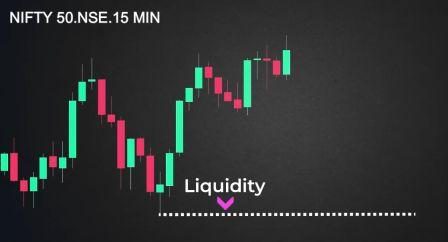
A good liquidity level is one that other traders can see easily too. Major swing highs and swing lows are the best liquidity levels because that is exactly where most traders place their stop losses, which makes them a natural target for manipulation.
Mark your levels on the 15 minute to 4 hour timeframe. This gives the level more strength and reliability.
Step 2: Wait for the Manipulation
Once the level is marked, your only job is to wait. Manipulation happens when price breaks slightly through that level and then immediately comes back. On the chart this looks like a long wick that poked past the level and returned.
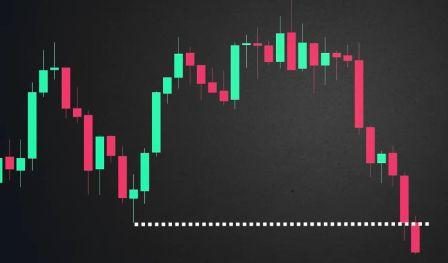
Do not enter before manipulation is confirmed. This is the most important rule of this strategy. Entering without confirmed manipulation is just repeating the same mistake that gets traders stopped out in the first place.
Step 3: Find the Inverse Fair Value Gap
This is the step that separates a good entry from a guessed entry. First let us understand what a Fair Value Gap is.
A Fair Value Gap forms when three candles line up in a sequence where there is a clear gap between the high of the first candle and the low of the third candle. The wicks of the first and third candles should not overlap at all. That gap in the middle is the Fair Value Gap.
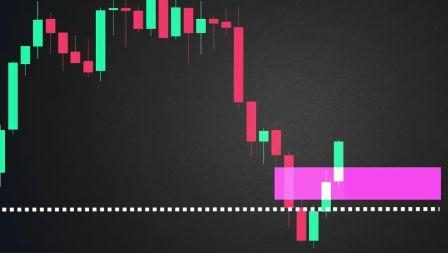
An Inverse Fair Value Gap is what forms when price breaks through that Fair Value Gap and closes on the other side. So if there was a bearish Fair Value Gap and price broke above it and closed above it, that is now an Inverse Fair Value Gap. This is your entry zone.
To understand Smart Money concepts like Fair Value Gaps and Order Blocks in more depth, check this out: Smart Money Concepts: FVG, Order Block and Reaction Block Explained
Step 4: Take the Entry
When all three conditions are in place, a clear liquidity level, a confirmed manipulation sweep, and an Inverse Fair Value Gap, you take the trade.
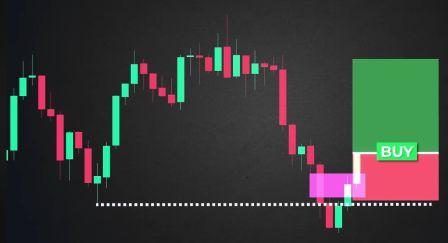
For a bullish setup, enter a buy at the close of the Inverse Fair Value Gap. Place your stop loss just below the gap. Set your target at 2x the stop loss distance or aim for the liquidity at the previous swing high if you expect a larger move.
For a bearish setup, do the exact opposite. Enter a sell at the close of the Inverse Fair Value Gap. Stop loss just above the gap. Target 2x or the previous swing low.
Live Market Example: Bullish Setup
On a 15 minute chart, price falls and bounces sharply from a level. We mark that as our liquidity level. A while later price breaks below that level, creates a long wick, and comes right back up. Manipulation is confirmed.
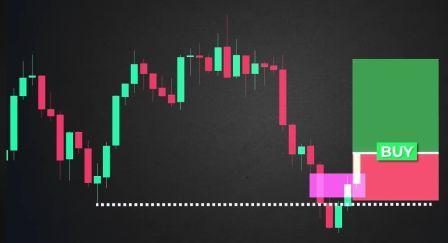
Near that reversal we spot a large red candle with a clear gap in its body. That is our Fair Value Gap. Price then breaks above that gap and closes above it. Inverse Fair Value Gap formed. We enter a buy, stop loss below the gap, target 2x. Price moves up and hits target.
Live Market Example: Bearish Setup
On a 5 minute chart, price keeps pushing up to a certain level and rejecting from it. That level at the highs is our liquidity level. Price then pokes above that level with a wick and comes right back down. Manipulation confirmed.
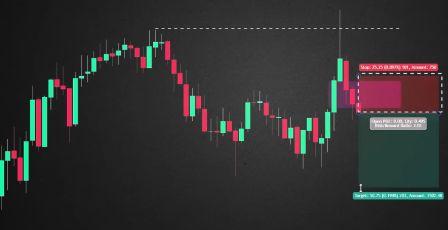
Near the reversal we see a large green candle with a gap in its body. Fair Value Gap identified. Price then breaks below the gap and closes below it. Inverse Fair Value Gap is set. We enter a sell, stop loss above the gap, target 2x. Price drops and target is hit.
Things to Keep in Mind When Using This Strategy
The level must be clearly visible. If you are working hard to justify a level, skip it and wait for a better one.
All three conditions must be present together. If even one is missing, do not force the trade. There will be another setup.
Never skip risk management. Always use a stop loss, no exceptions. We have covered this in detail here: Risk Management in Trading: Why Most Traders Blow Their Account
This strategy works best on the 3 minute to 15 minute timeframe. Smaller timeframes give you more setups throughout the day.
Use AKTV Radar to Make This Strategy Even Easier
Manipulation entry only works when you are in the right stock at the right time. Scanning 200 stocks manually for manipulation setups is not realistic during live market hours.
That is exactly why we built AKTV Radar. It scans 200 plus NSE stocks every 5 minutes and surfaces the ones with the strongest momentum. No login, no subscription, completely free. Just open aktv.in/radar during market hours and start looking for setups on the stocks that show up.
If you trade options, check out AKTV Sniper which gives entry signals specifically for NIFTY and SENSEX. And for positional trade opportunities, AKTV Swing scans for fresh crossover setups on 30 minute candles.
Conclusion
The manipulation strategy is not complicated. You need three things: a clear liquidity level, a confirmed manipulation sweep of that level, and an Inverse Fair Value Gap near the reversal. When all three line up, you have a high probability entry with a defined risk.
The market is always looking to trap retail traders. But now you understand how that trap works. So the next time you see manipulation happen on a key level, do not panic and do not chase. Wait for the Inverse FVG and let the setup come to you.
Read in Hindi: Market आपको फंसाए उससे पहले आप Market को फंसाओ
Watch full video on this: Click Here
Also read: Fair Value Gap; Order Block and Reaction Block
Also read: Fake Breakout: How the Stock Market Traps Retail Traders
Also read: Risk Management in Trading
Disclaimer: This article is for educational purposes only. AKTV is not SEBI registered. Nothing here constitutes investment advice. Trading involves risk of loss.
Written by: Ardan Kumar | Founder | aktv.in

About the Author
Ardan Kumar
Ardan Kumar is the founder of AKTV, a free trading education platform for Indian retail traders. He served 8 years in the Indian Air Force as an Aircraft Maintenance Engineer, working on Mi-17 helicopters and earning special service medals for Operation Rhino in the Mizo and Naga Hills. After leaving the Force, he entered the stock market, learned trading the hard way, and built AKTV to teach others what took him years to figure out. He holds an MBA in Marketing and Finance from CRSU Jind where he topped the course, and has cleared UGC-NET in Management. He is also the co-founder of One Percent Capital LLC, Texas, USA. His YouTube channel AKTV Business has over 27,000 subscribers. Everything on AKTV is free: no login, no payment, no hidden charges.