🗓️ Last Updated: 10 May 2026
Ardan Kumar | AKTV | Trading Education | 9 min read
Read in Hindi: डब्बा स्ट्रैटेजी: पिछले दिन के हाई और लो से कैसे करें ट्रेडिंग
Table of Contents
Friends, in over 8 years of trading, one thing that has become very clear to me is that traders who keep things simple in the beginning make decent money. But as they start learning more and more strategies and keep adding new things to their setup, their profits start going down. What this tells us is that the simpler and easier our strategy is to use, the better and faster decisions we can take.
One more thing. If you are taking too long to decide a trade or you feel no confidence while taking it, there is a very high chance that your strategy is wrong. Trading is a game of timing, just like cricket, and any strategy that messes up your timing is of no use to you.
So friends, in today’s post I am going to teach you one simple and straightforward trading strategy that can cover your daily expenses, and that too in just one to two hours. This strategy is called the Box Trading Strategy.
This has been one of my main strategies for the past three years and I have pulled out some profit from it almost every single day.
What is the Box Trading Strategy
Box Trading Strategy is a universal strategy. It does not matter which market you trade or what instrument you are trading, this works everywhere.
The first thing you need to do in this strategy is draw a box on your chart using the previous day’s high and low price. It is very simple to do. Just pick the rectangle tool, connect the highest price of the previous day with the lowest price and your box is ready.
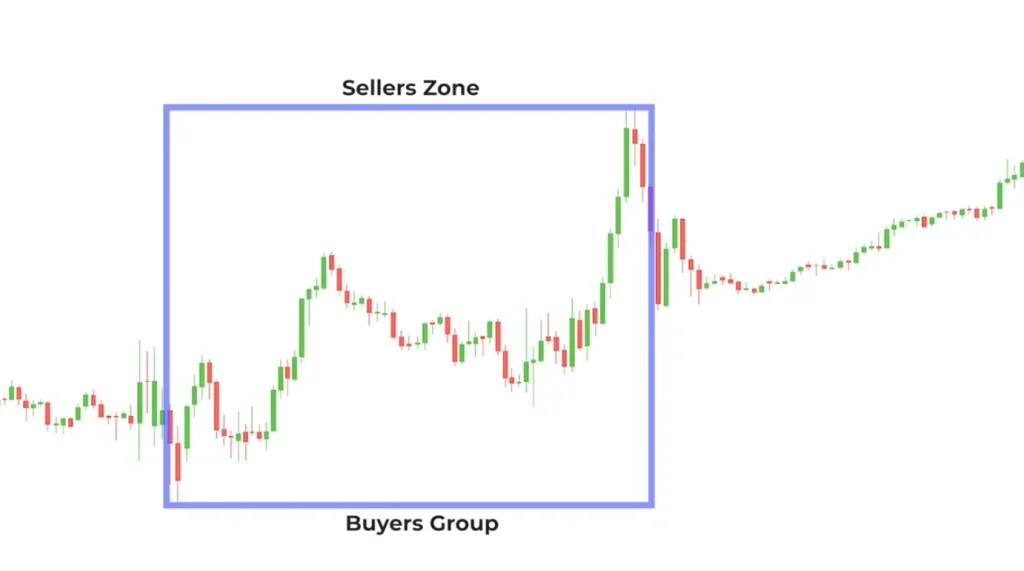
The upper side of this box represents the zone where the biggest sellers are sitting, ready to push the market down. The lower side represents the zone where the biggest buyers are sitting, giving the market the power to bounce back. Both these levels are the most important for us because whenever the market comes near these levels, the action picks up. As a trader what we need is a reasonable price and a volatile environment. This box gives us exactly that.
What to Do After Drawing the Box
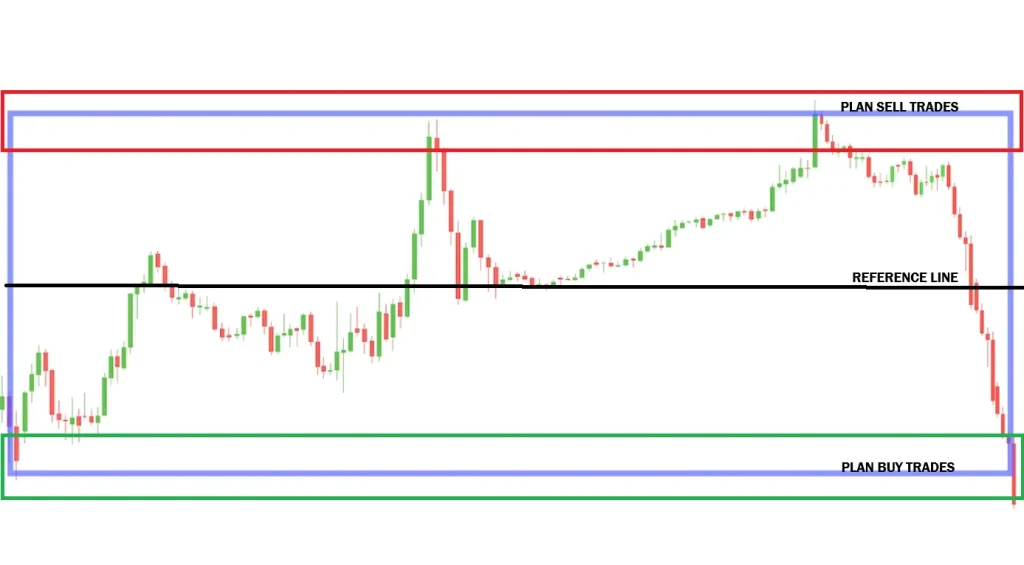
As soon as the market opens, draw this box on your chart. Now there are three simple rules.
Rule one. If the price is slightly below the upper level, at the level, or slightly above it, do not buy under any circumstances. In this zone our focus should be only and only on selling.
Rule two. If the price is slightly above the lower level, at the level, or slightly below it, do not sell under any circumstances. Whether you want to exit your existing buy position or you want to go short, do not sell at this level.
Rule three. Draw a line right in the middle of this box. Whenever the price is around this line, avoid taking any trade. For the first 10 to 15 minutes after market open, taking a trade in this zone is like hitting yourself with an axe. At this time you are far from both the high buyer zone and the high seller zone, which means the accuracy of your trade drops very badly.
What if the Market Opens with a Gap
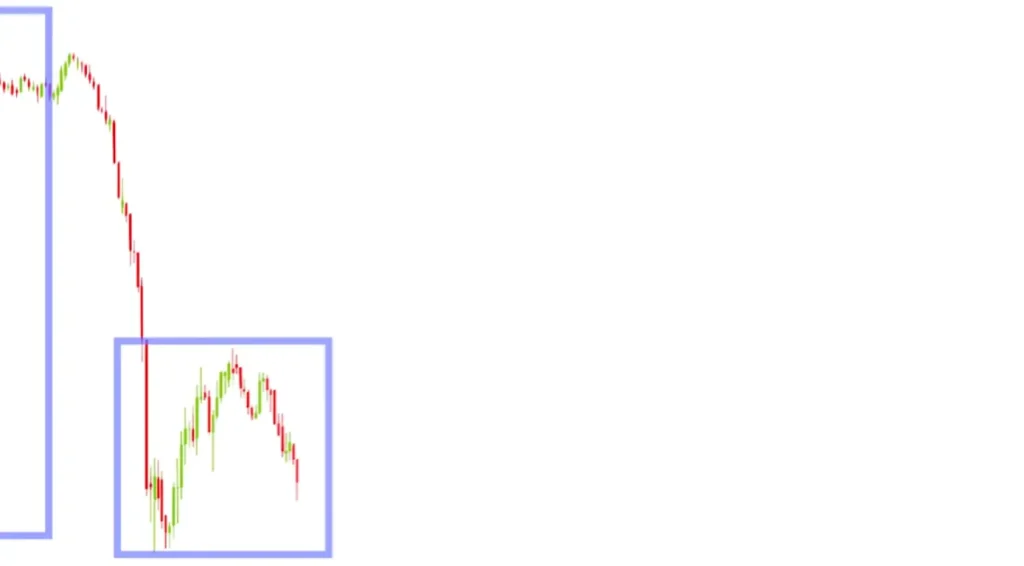
Anything can happen in trading. There will be times when the market opens above your box or below it. In that situation using the original box becomes difficult and you will need to draw a secondary box.
In this situation, keeping any timeframe in focus, wherever you see a high and low pattern forming, pick the rectangle tool and draw a fresh box there. It does not matter what the timeframe is or what you are trading. The box and the secondary box are always drawn the same way.
The same rules apply to this new box as well. The buy signals here may not be as strong but your psychology should still be on the buy side. You are still in a buy zone. You have to keep your trust in this strategy and this process.
The big buyers and sellers are still sitting at their old levels and they will not let the price go past them so easily. Remember this. The market moves within a fixed range 95 times out of 100.
When to Call it a Breakout
Friends, a lot of traders either use breakout and breakdown in the wrong way or they never fully understand it.
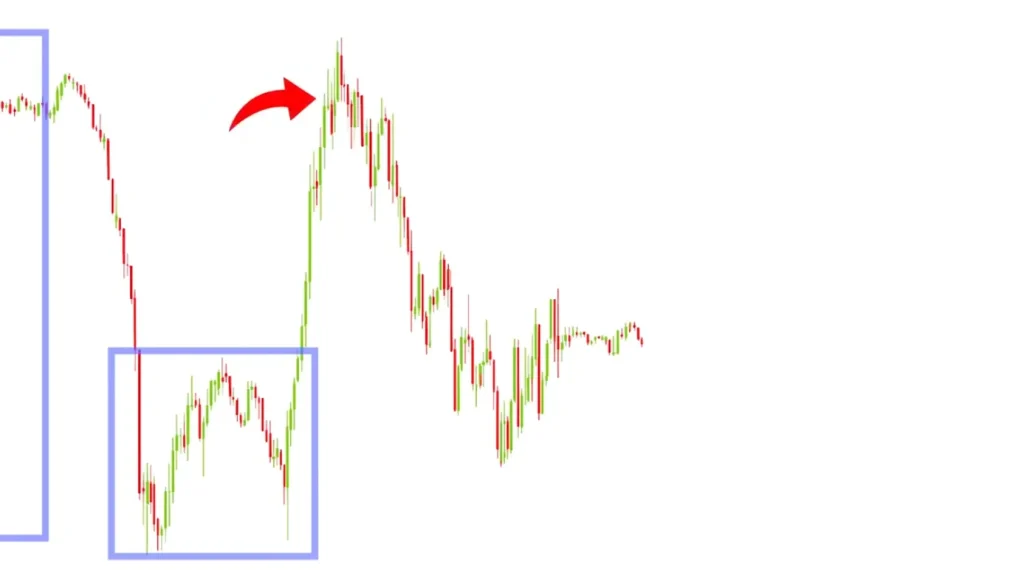
Just because the price is running fast or moving aggressively upward or testing a resistance level, we will not call that a breakout. As long as the price stays inside the box or is just taking swings above and below the levels, we can fully trust the Box Trading Strategy and the market will keep moving up and down inside this box.
When the market finally steps outside this box, that is when the chances of a big move go up dramatically. That situation is what we will call our official breakout.
Full Review of Box Trading Strategy in One Minute
First, as soon as the market opens, draw a box using the previous day’s high and low.
If the price is near the upper level of the box, take a sell position on any confirmation with a good risk to reward ratio. At the lower level of the box, do the opposite. Avoid taking any trade around the middle line.
Do not let price movements or other distractions affect your psychology. Keep your trust in your strategy and your process.
Friends, if you have any doubts about today’s post, you can ask us in the comments. See you in the next one. Jai Hind.
Read in Hindi: डब्बा स्ट्रैटेजी: पिछले दिन के हाई और लो से कैसे करें ट्रेडिंग
Watch a video on this topic: Click Here
Also read: Fair Value Gap; Order Block and Reaction Block
Also read: Fake Breakout: How the Stock Market Traps Retail Traders
Also read: Risk Management in Trading
Disclaimer: Trading in options involves significant risk. This article is for educational purposes only. AKTV is not SEBI registered. Do your own research before placing any trade.
Written by: Ardan Kumar | Founder | aktv.in

About the Author
Ardan Kumar
Ardan Kumar is the founder of AKTV, a free trading education platform for Indian retail traders. He served 8 years in the Indian Air Force as an Aircraft Maintenance Engineer, working on Mi-17 helicopters and earning special service medals for Operation Rhino in the Mizo and Naga Hills. After leaving the Force, he entered the stock market, learned trading the hard way, and built AKTV to teach others what took him years to figure out. He holds an MBA in Marketing and Finance from CRSU Jind where he topped the course, and has cleared UGC-NET in Management. He is also the co-founder of One Percent Capital LLC, Texas, USA. His YouTube channel AKTV Business has over 27,000 subscribers. Everything on AKTV is free: no login, no payment, no hidden charges.